 Back to Work
Forge Foundation
|
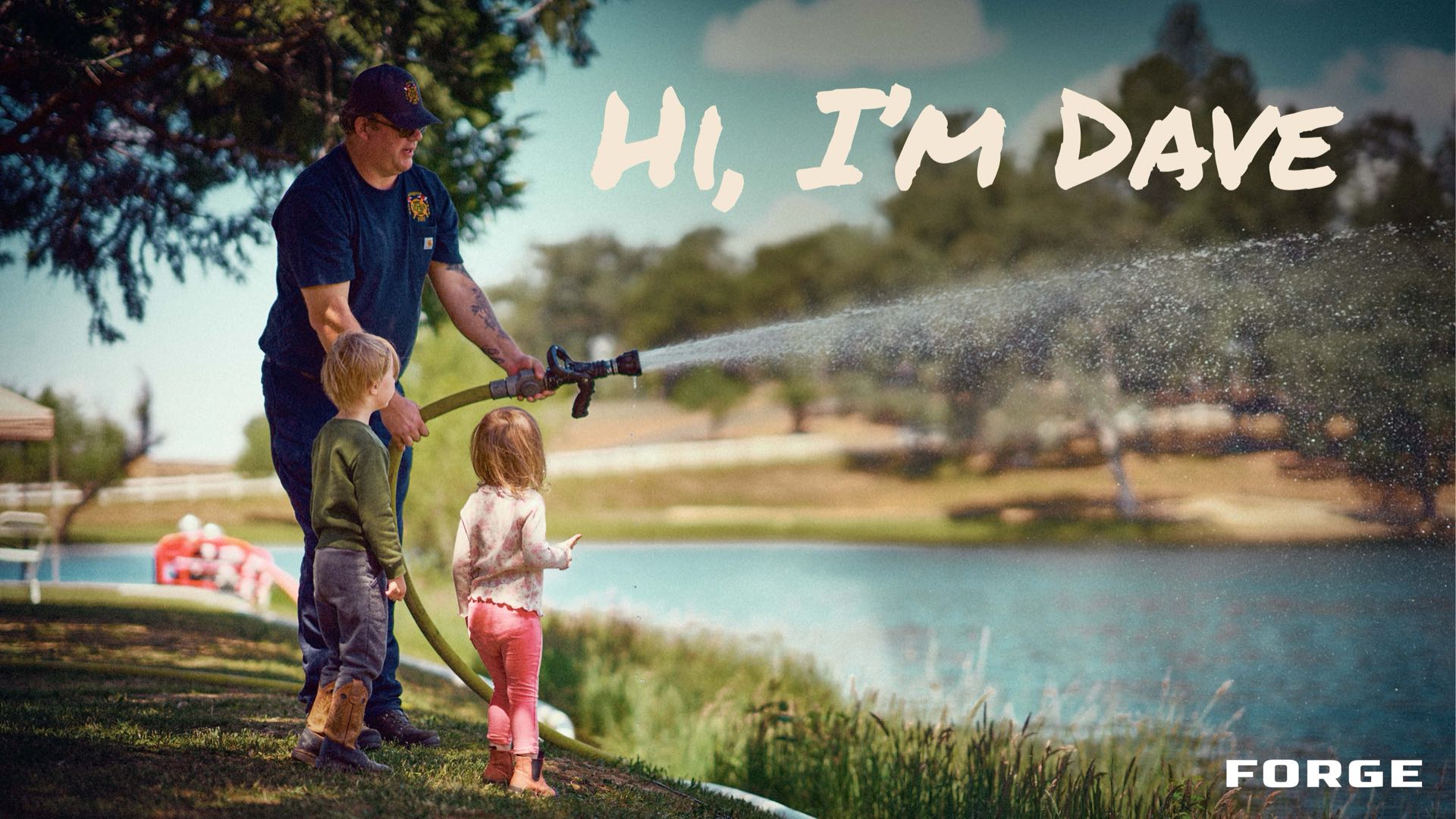
Hi, I'm Dave
A campaign built to turn passive support for local firefighters into active community participation by making the relationship personal.
Brand
Forge Foundation
Type
Spec Campaign
Year
2026
Disciplines
Brand Strategy
Creative Strategy
Integrated Campaigns
The Challenge
“Support your firefighters” was easy to agree with — and easy to ignore.
The Forge Foundation was working in a region where wildfire risk is part of everyday life. Residents respected firefighters, but respect alone did not create preparedness.
The challenge was to move the audience from passive support to active participation before the next emergency demanded it.
Context
El Dorado County communities are spread across rural terrain where evacuation routes are limited and mutual aid matters. More than a million acres to protect, tens of thousands of households at risk, and roads that must serve both evacuating residents and incoming fire crews.
The audience is self-reliant, community-minded and deeply connected to place. They help neighbors without being asked. They know the roads, the land, and the people around them.
The opportunity was to build preparedness around those same instincts.
The Insight
People act for people they know.
Awareness messaging can disappear quickly. Relationships do not.
If firefighters remain anonymous uniforms, preparedness stays abstract. But when the firefighter is Dave, Chris or Aaron — the person you see at the store, whose kids go to school with yours — the relationship changes.
Support becomes personal. And personal relationships are more likely to create action.
Strategy
Talk like a neighbor.
The campaign avoids institutional language and speaks on a first-name basis. Not “support your local firefighters” but “Hi, I'm Dave.”
The strategy makes the firefighter recognizable before making the ask. The invitation should feel like it came from someone the audience already knows.
The Big Idea
Hi, I'm Dave
The campaign introduces firefighters as neighbors first. Each story gives the audience a person to know, a life to recognize, and a reason to care before asking them to participate.
The idea is intentionally simple: if people act for people they know, introduce them. That human connection becomes the bridge between awareness and readiness.
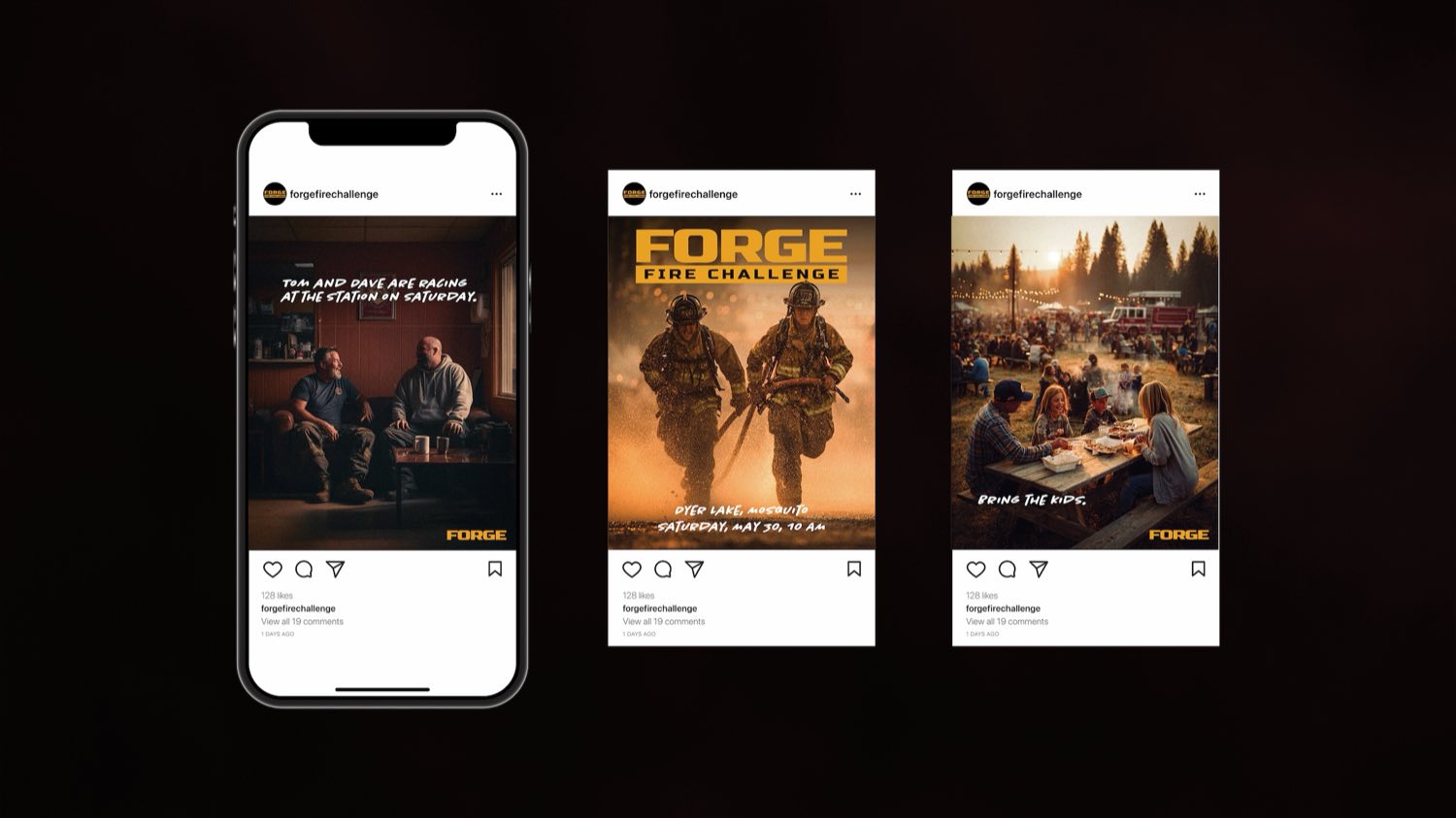
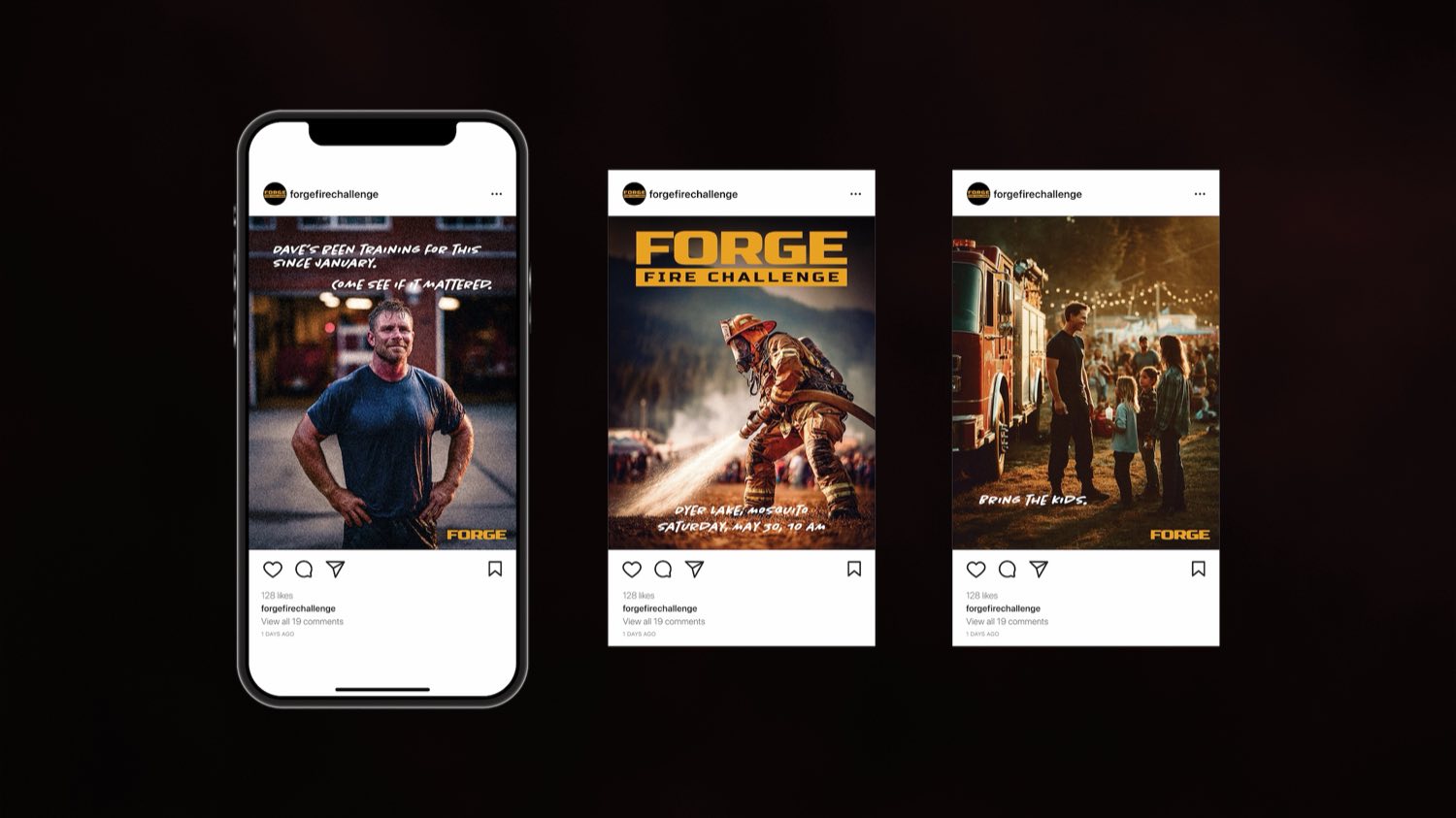
The brand role. Forge was built around the belief that local firefighters can lead change inside their own stations and communities. Its flagship event, the Forge Fire Challenge, reimagines the traditional firefighter muster as a community experience built around competition, skill, teamwork and connection. Families gather. Neighbors meet the people behind the uniform. Firefighters become part of the community before the emergency.
Creative Direction
The visual direction balances the severity of wildfire with the familiarity of rural life.
Large landscapes establish the scale of the environment. Portrait-driven content brings the story back down to the individual. The campaign moves deliberately between those two levels — this is a large problem, but the solution begins locally.
The System
Social. The executions introduce firefighters and the event through direct, conversational storytelling. Rather than treating the event like a public-service announcement, the work feels like an invitation from someone in the community. That tone helps Forge build familiarity before asking people to show up.
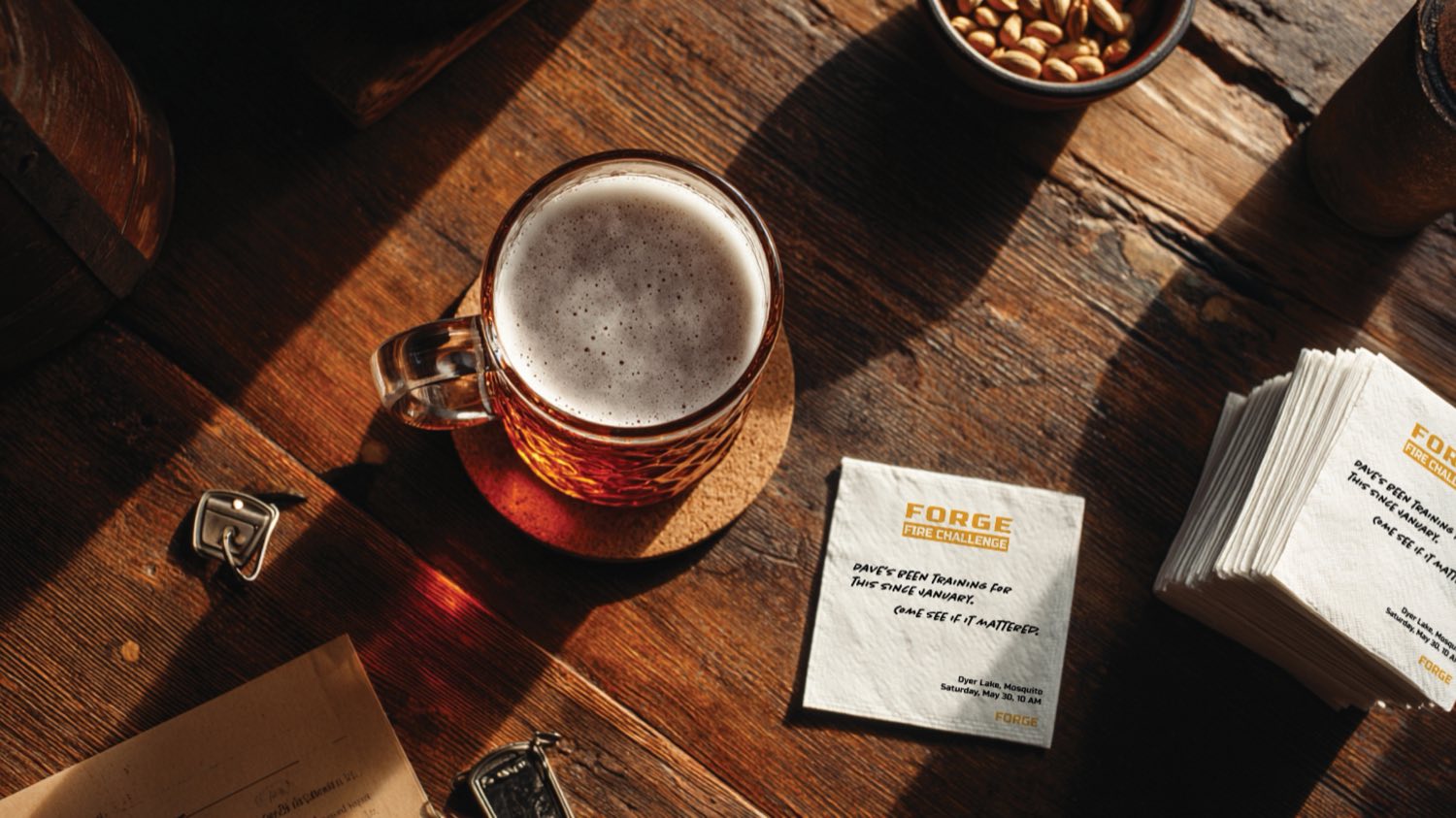
Environmental and local touchpoints. The campaign extends into physical spaces where community relationships already happen. Printed applications reinforce the same first-name, neighbor-to-neighbor approach, keeping the work from feeling like distant institutional messaging and making Forge part of everyday community life.
What I Learned
Respect is passive. Relationships create action.
Make the firefighter known. Make the community care. Then give them something to do.